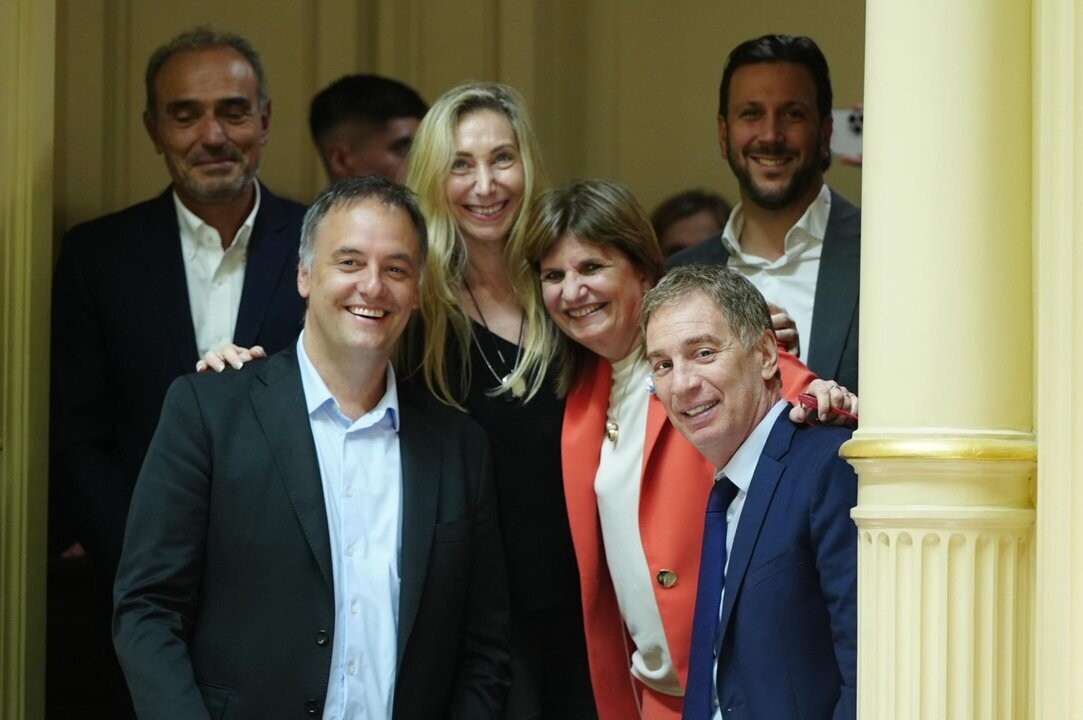
Buenos Aires, February 12 (NA) – After an extensive session, the national government secured a new legislative victory with the provisional approval of the labor reform, which was passed last Wednesday after implementing a series of key modifications to the original bill. According to Argentine News Agency sources from high-ranking officials, the changes were contemplated from the beginning and were approved by the entire political table coordinated by Chief of Staff Manuel Adorni, representing President Javier Milei's line and the Secretary General of the Presidency, Karina Milei. While in the Casa Rosada they attribute the victory to the political table as a whole, with even celebrations before Wednesday's vote, they admit the existence of dissent that had to be settled with the intervention of the coordinating minister on behalf of the Mileis. However, on a discursive level, libertarian figures who chose to break the secrecy of the hard core that meets weekly in the Casa Rosada pointed to the Executive's resistance to yielding to the requests of allied governors and legislators. The few voices that privately admitted the possibility of implementing changes argued that they would be made in points that did not alter the spirit of the reform, which bets on job generation. Although he appeared victorious on social media after the provisional approval, his original ideas suffered several modifications at the request of allies. After fifteen hours of debate and with the support of PRO and the Radical Civic Union, Bullrich closed the night with the provisional approval of a law that would only authorize banks to pay salaries, maintains solidarity quotas, eliminates the reduction in employer contributions for social works, among other modifications. __IP__With an air of triumph, this Thursday the Lower House was debating the Juvenile Criminal Law, awaiting Vice President Victoria Villarruel to send the project to Deputies. In this way, the libertarian administration will seek to issue its opinion on February 18 and session on February 25, which would force President Javier Milei to issue a decree to extend the extraordinary sessions until February 28. Like a winning team that is not changed, the presence of the Minister of the Interior, Diego Santilli; the interior strategist, Eduardo “Lule” Menem; the Secretary of Strategic Affairs, Ignacio Devitt; and the Chief of Staff, Manuel Adorni, is expected. #AgenciaNA “There were some formulations that we knew we could modify in advance,” clarified an official aware of the matter to this medium. Again, the Minister of Economy, Luis Caputo, saw his plans to advance this time with the sanction of the tax chapter, strongly rejected by the governors who questioned the reduction in the Income Tax that would affect provincial revenue. Something similar happened in December, when the Chamber of Deputies left out Chapter XI, which included the repeal of the Pediatric Emergency Law and the University Financing Law, among other points, and which, with the president's support, insisted on its treatment despite warnings from legislative figures such as Patricia Bullrich and Martín Menem. Another of the harshest officials on the project's points was one of its drafters, the Minister of Deregulation and State Transformation, Federico Sturzenegger, who pushed to further flexibilize labor conditions.